The First Foundation
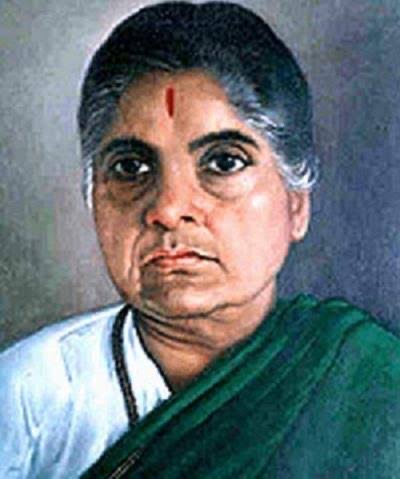
Before she was a lawyer, a legislator or a founder of institutions, Durgabai was a girl in a Godavari town whose formal schooling ended at about twelve — and who responded by starting a school of her own.
Date15 July 1909
PlaceRajahmundry, Godavari district, Madras Presidency
Recorded asG. Durgabai — the name under which she signed the Constituent Assembly register
ContextBritish India; a Telugu-speaking region of the Madras Presidency, decades before Andhra Pradesh existed
A Godavari childhood
Durgabai was born on 15 July 1909 at Rajahmundry — Rajamahendravaram — a temple and river town on the Godavari in what was then the Madras Presidency of British India, and is today Andhra Pradesh. The family was Telugu-speaking and of modest means. The memorial in Hyderabad that carries her name records her parents as Rama Rao and Krishnavenamma.
Almost everything else about her first decade reaches us through recollection rather than record — largely her own, in the memoir she published in 1980, and the accounts of people who knew her. Where this chapter relies on recollection it says so. Childhood is the part of a public life for which contemporaneous documents almost never exist, and it is also the part that later admirers most often decorate.
A marriage made and unmade
By the custom of the time and place she was married as a child — most accounts put her age at about eight. The marriage was never a functioning one. As she grew up she refused it, and by her mid-teens she had negotiated her way out of it in order to go on studying. Accounts differ on exactly how this was settled and on the part played by her family; what is not in dispute is that a girl in the 1920s ended her own marriage and was supported in doing so.
It is worth pausing on the ordinariness of the arrangement she broke. Child marriage was not a scandal in her world; it was the default. The Child Marriage Restraint Act would not be passed until 1929, when she was twenty. Her later insistence that women needed education first, and legal knowledge second, was not an abstract position. It came out of this.
Two episodes are told in almost every account of her childhood: that she prevented her widowed mother's ritual tonsure, and that she once turned Jawaharlal Nehru away from an exhibition gate for want of a ticket. Both are recollections, repeated for decades, and neither rests on a contemporaneous document. They are included here as what they are — stories that a movement told about one of its own — and not as established fact.
The schooling she gave up
In 1920 the Indian National Congress adopted Non-Cooperation, and among the things it asked Indians to withdraw from were government schools and colleges. Durgabai, then about twelve, left her English-medium school. In the standard telling this is presented as a protest against English as the medium of instruction; in the context of 1921–22 it was also simply what a politically awake household did.
What she did next is the more interesting half. Having refused one kind of education, she went and manufactured another. She learned Hindi — quickly, by every account — and began teaching it to girls at Kakinada. The school she ran there is remembered as the Balika Hindi Pathasala, and it dates from 1922.
This is the pattern of her whole life in miniature, arriving fully formed at the age of thirteen: refuse the arrangement in front of you, then build the replacement yourself.
AgeAbout 14
PlaceCocanada (Kakinada), Madras Presidency
EventAnnual session of the Indian National Congress, 1923
Her roleVolunteer; organiser of the khadi exhibition
Early courage: the Kakinada Congress, 1923
In 1923 the Congress held its annual session at Cocanada — Kakinada — and Durgabai worked it as a volunteer. She was about fourteen. She was put in charge of the khadi exhibition, which in a Congress session of that period was not a sideshow: khadi was the movement's economic argument made touchable, and the exhibition was where delegates were expected to buy it.
We have her own description of Kakinada in that year, and it is unusually good evidence, because she gave it under her own name on the floor of the Constituent Assembly twenty-six years later, while arguing about the national language:
“In that year, when Sethji visited Cocanada for the Congress Session he visited some ladies’ institutions where he found some hundreds of women learning Hindi… the organisers declined the donation saying: ‘We also feel that we should have a national language. We are therefore conducting the school in Hindi with our own efforts.’”G. Durgabai, Constituent Assembly of India Debates, Vol. IX, 14 September 1949, pp. 1426–1429
Read as a source rather than as a speech, this tells us three concrete things about 1923: that there were women's institutions at Kakinada teaching Hindi, that they were large enough for a visiting national figure to notice, and that they were run on local money by choice. Jamnalal Bajaj, the Congress treasurer, offered a donation and was turned down. That is the world in which Durgabai learned how to organise, and it was already a world of women's institutions before she founded one.
What she took from it
By the end of the 1920s she had no formal qualifications, one dissolved child marriage, a school she had started, and several years of practical experience running things for the Congress in the Andhra districts. She was twenty years old. Everything on the rest of this site — the law degree, the Constituent Assembly, the welfare board, the hospitals — was built on that foundation and not on a conventional education.
The record
Established, reported, and disputed
- EstablishedBorn 15 July 1909Consistent across parliamentary, institutional and encyclopaedic sources, and on the memorial in Hyderabad.
- EstablishedRajahmundryGiven as her birthplace in the profile maintained by the Constituent Assembly archive project and in standard references.
- ReportedMarried at about eightRepeated consistently, but resting on recollection rather than a register entry.
- ReportedSchool at Kakinada, 1922The Balika Hindi Pathasala is described in institutional histories of the Andhra Mahila Sabha.